Calculate your cost savings
TACNA 619.661.1261

2026 USMCA Review: What U.S. Manufacturers Must Prepare for Before Expanding to Mexico

top US trading partner
 

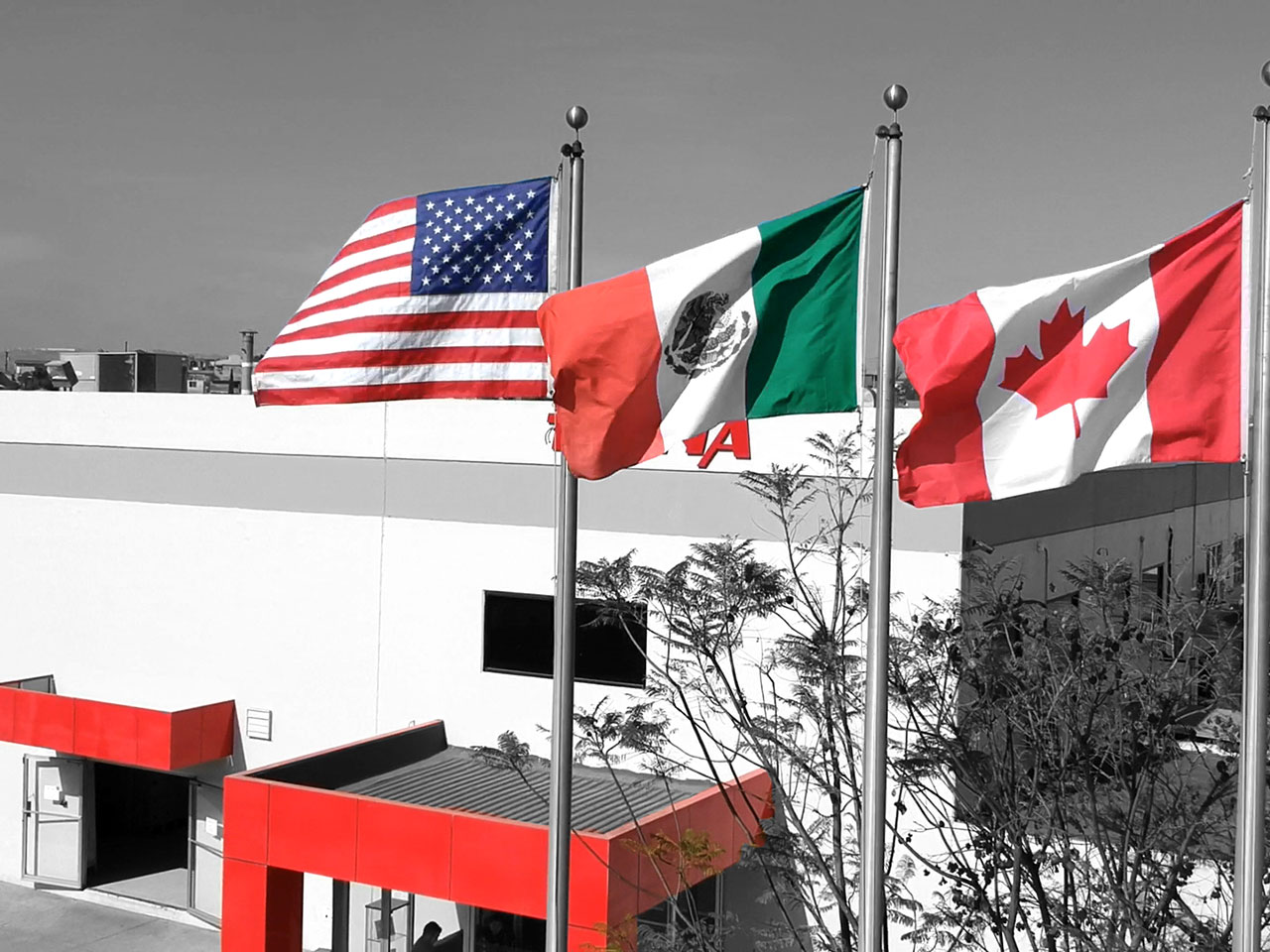
The upcoming 2026 review of the USMCA is no longer a distant policy checkpoint. For U.S. manufacturers evaluating Mexico as part of a nearshoring strategy, it has become a planning horizon that directly affects today’s decisions.

This review is not expected to reopen the agreement from scratch. Instead, it will focus on how the treaty is being applied in practice: where value is created, how compliance is enforced, and whether manufacturing strategies truly align with the spirit of North American integration. As a result, companies expanding into Mexico today will be operating under a regulatory lens that is likely to become sharper—not looser—over the next two years.

What matters most is not speculation about political outcomes, but understanding how enforcement, audits, and expectations are converging across trade, labor, energy, and governance.

One of the core areas under scrutiny is rules of origin. While these rules are already well defined, enforcement has become increasingly granular. Authorities are moving beyond high-level compliance toward verifiable transformation, requiring manufacturers to clearly demonstrate regional value content, traceable inputs, and consistent alignment between imports, production processes, and exports. Operations that rely on fragmented documentation or loosely integrated suppliers may find themselves exposed as scrutiny increases.

Labor compliance is another dimension that has shifted meaningfully since USMCA came into effect. Mexico’s labor reforms are no longer viewed as a domestic issue alone; they are increasingly treated as a trade compliance variable. By 2026, expectations around union representation, collective bargaining, wage transparency, and payroll accuracy are likely to be evaluated not just locally, but through coordinated cross-border mechanisms. For U.S. manufacturers, this means labor practices in Mexico must withstand external validation, not just internal review.

Energy and sustainability considerations are also becoming part of the broader trade narrative. While USMCA does not mandate a single energy model, the review will likely assess whether regional production supports long-term stability, transparency, and competitiveness. Energy sourcing, environmental compliance, and operational resilience are no longer background issues—they increasingly shape how North American manufacturing strategies are perceived and defended.

Perhaps the most immediate implication of the 2026 review is the expectation of audit-ready operations. Trade authorities are placing greater emphasis on consistency across systems: customs documentation, tax treatment, inventory controls, HR records, and accounting must align. For manufacturers operating under IMMEX or other export frameworks, the ability to reconcile data across functions is becoming a baseline requirement rather than a best practice.

This growing complexity does not mean that manufacturing in Mexico is becoming less attractive. It does mean that how operations are structured matters more than ever.

For many companies, the challenge is not understanding these requirements, but executing them consistently without adding disproportionate legal and organizational weight. This is where the shelter model becomes strategically relevant. Operating under a shelter allows manufacturers to retain control over production, technology, and performance while relying on an established Mexican entity to manage labor compliance, trade operations, accounting, and audit readiness within a proven framework.

Providers like TACNA structure operations to be compliant by design, not retrofitted after scale. This allows companies to enter Mexico faster, maintain consistency across sites, and adapt to regulatory shifts without repeatedly restructuring their corporate footprint. Just as importantly, it preserves optionality as policy discussions evolve toward 2026.

The manufacturers best positioned for the next phase of USMCA are not those trying to predict every regulatory outcome, but those building operations that can withstand scrutiny across multiple dimensions—trade, labor, tax, and governance—at the same time.

Preparing for the 2026 USMCA review is ultimately less about the review itself and more about discipline in how Mexico operations are designed today. The question is no longer whether nearshoring to Mexico makes sense, but whether the operation is structured to remain stable, compliant, and defensible as the rules are tested.

Why Baja California Is Becoming the #1 Nearshoring Hub for U.S. Manufacturing Leaders

For U.S. manufacturing leaders, nearshoring is no longer a tactical adjustment—it is a long-term strategic decision. As companies rethink supply chains, reduce dependency on Asia, and prioritize speed-to-market, one region in Mexico continues to rise above the rest: Baja California.

Panama Canal alternative


Cities like Tijuana, Mexicali, Tecate, and Ensenada are increasingly viewed not just as manufacturing locations, but as strategic operating platforms for North American production. For C-level executives evaluating the best locations in Mexico for manufacturing, Baja California has become a top contender—and in many cases, the first choice.

Strategic Geography That Directly Impacts Performance

Baja California’s proximity to the United States is unmatched. With direct border access to California and Arizona, manufacturers benefit from shorter transit times, reduced logistics complexity, and real-time coordination with U.S. headquarters. This geography enables same-day or next-day cross-border shipments, making the region especially attractive for high-mix, time-sensitive, and just-in-time manufacturing environments.

Unlike inland regions, Baja California offers a seamless operational bridge between U.S. decision-making and Mexican production, allowing leadership teams to stay closely connected to plant performance without the friction of long-distance oversight.

A Mature Manufacturing Ecosystem, Not an Emerging One

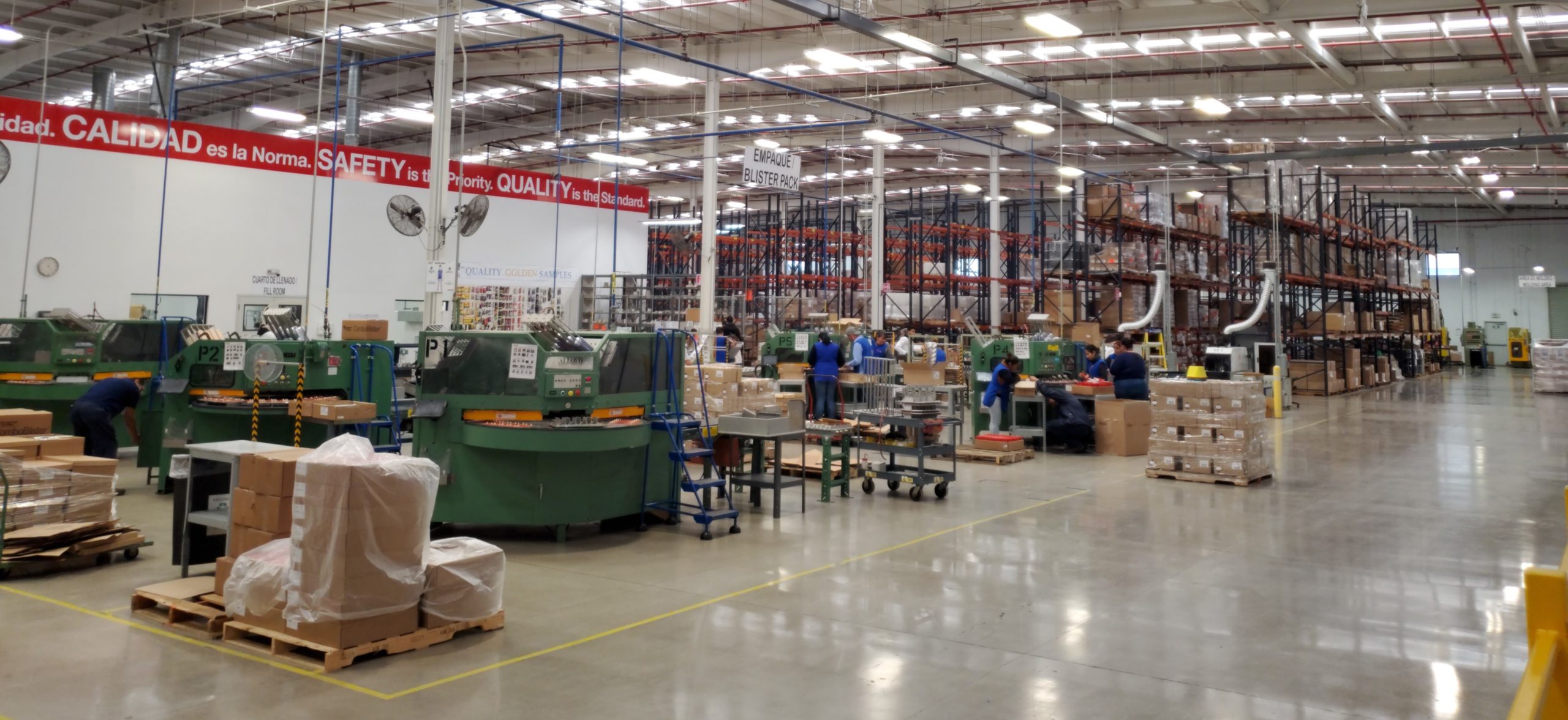
One of Baja California’s biggest advantages is that it is not a new manufacturing market. The region has decades of experience supporting industries such as medical devices, aerospace, electronics, automotive, and industrial equipment. This maturity translates into established supplier networks, experienced management talent, and a workforce already trained in global manufacturing standards.

For executives, this reduces execution risk. Instead of building an ecosystem from scratch, companies plug into an environment that already understands compliance, quality systems, and international customer expectations.

Labor Availability with Industrial Experience

While labor availability is a national concern, Baja California continues to offer a competitive advantage through its concentration of technically skilled operators, engineers, and supervisors with direct experience working for multinational manufacturers. The workforce is familiar with lean manufacturing, quality certifications, and regulated industries.

More importantly for leadership teams, productivity and learning curves tend to be shorter compared to less industrialized regions, which directly impacts ramp-up speed and cost predictability.

Logistics Infrastructure Designed for Cross-Border Manufacturing

Baja California’s infrastructure is purpose-built for international trade. The region benefits from multiple border crossings, access to major U.S. highways, international ports, and proximity to West Coast distribution hubs. This connectivity supports flexible logistics strategies—whether the priority is speed, redundancy, or cost optimization.

For U.S. manufacturers under pressure to improve delivery reliability while managing inventory exposure, this logistics advantage is a key differentiator.

FDI Momentum and Industry Clusters

Foreign Direct Investment continues to flow into Baja California, reinforcing its role as a nearshoring hub. This momentum fuels the growth of industry clusters, strengthens the supplier base, and attracts specialized service providers. For executives, this creates a virtuous cycle: more investment leads to more infrastructure, deeper talent pools, and better operational support.

Clusters also reduce long-term risk. When suppliers, talent, and services are concentrated in one region, scalability becomes easier and disruptions are easier to absorb.

Lower Barriers to Entry Through the Shelter Model

Even with all these advantages, entering Mexico can still feel complex at the executive level—particularly when it comes to compliance, labor law, customs, and tax exposure. This is where the Shelter model becomes a strategic enabler.

Operating under a Shelter allows manufacturers to leverage Baja California’s advantages without establishing a legal entity or assuming immediate regulatory risk. Permits, IMMEX compliance, payroll, labor administration, environmental requirements, and import/export processes are managed by the Shelter, allowing leadership teams to focus on operations, quality, and growth.

For many companies, this dramatically reduces time-to-market, lowers entry risk, and provides flexibility—especially during the first phases of nearshoring.

Why Baja California Continues to Outperform Other Regions

While other Mexican regions offer copetitive labor costs, Baja California consistently outperforms due to its combination of proximity, experience, infrastructure, and operational maturity. For C-level decision-makers, the region aligns with the core objectives of nearshoring: speed, resilience, visibility, and control.

When paired with the Shelter model, Baja California becomes not just a manufacturing location, but a strategic operating platform for North American growth.

Final Thought for Manufacturing Leaders

The question is no longer whether Mexico is a viable manufacturing destination—it clearly is. The real question is where and how to enter. For U.S. manufacturing leaders evaluating the best locations in Mexico for manufacturing, Baja California stands out as a region built for execution, scalability, and long-term competitiveness.

And for companies seeking to move fast while managing risk, combining Baja California’s ecosystem with a proven Shelter partner often becomes the most strategic path forward.

It’s easier than you think.

Get in touch and we’ll show you how.