Calculate your cost savings
TACNA 619.661.1261

Mexico Pushing for Energy Independence with Refinery Purchase

News of a recent refinery purchase by the government of Mexico underscores the Latin American country’s push for energy independence. While there are many challenges to achieving this, the current presidential administration has made it a top priority. 
Yes, Mexico has abundant energy resources. But harnessing these has not come easy. In order to be able to supply the majority of their demand, they will need to accelerate their capacity and dramatically curtail their dependence on US imports. 

A recent emphasis on infrastructure acquisitions and improvements is a step in the right direction. And the Texas refinery will certainly help. But many remain skeptical that they can pull it off within the target window.

Mexico Purchases Texas Refinery 

Under the direction of President Andres Manuel López, Mexico’s national energy company, Petroleos Mexicanos, has purchased a controlling interest in an oil refinery located in Deer Park, Texas. Pemex, as the company is commonly called, spent $596 million USD on the buy-out in an effort to expand processing capacity. 

Situated on the Houston ship channel, the Deer Park oil refinery will be Pemex’s only major operation outside the country’s borders. Ownership transferred in mid-January, and Mexico hopes this will increase their chances of achieving energy independence by next year. The refinery currently produces 340,000 barrels a day

As part of the deal to take over full control of operations at the refinery, Pemex agreed to pay off $1.2 billion USD in debts jointly held by Pemex and Shell. Previously, Shell’s interest in the refinery was 50%. They sold their stake in an unplanned sale after being approached by Pemex last year. In December of 2021, the Mexican government announced that the US Treasury Department had approved the deal.  

The refinery purchase is part of a larger effort Mexico is making to expand their holdings. Mexico is also spending approximately $2.9 billion USD on a coking unit currently being constructed in the state of Hidalgo. Combined with constructing the Dos Bocas refinery in the state of Tabasco to process 340,000 barrels a day, Mexico hopes to achieve an additional refining capacity of 700,000 barrels a day in total. 

Mexico is also investing approximately $10 billion USD into rehabilitating their existing six refineries. This newest refinery purchase could mean Mexico will double their refining capacity over last year. There are also plans to increase capacity at a Veracruz refinery by another 100,000 barrels a day.

Energy Independence Goals

Mexico’s energy independence goals follow a two-pronged approach. They want to both increase domestic production and eliminate foreign exports. Speaking at a press conference at the end of 2021, Mexico Energy Minister Rocío Nahle spoke of a three-year plan. The plan includes reducing exports of crude by 435,000 barrels a day in 2022 and then nearly 100% in 2023 when all of Mexico’s crude could theoretically be refined by Pemex facilities. 

However, there are some serious challenges to Mexico’s plans of energy independence that go beyond this refinery purchase. For one, Mexico’s utilization rate has been around 40% in recent years. The plan rests on achieving 86% utilization across the entire refining system. The Deer Park refinery is hoped to make a huge impact on this average, yet its utilization average is about 80%. 

Mexico also hopes to produce more crude in the near future. But while the country effectively threw its doors open to energy-sector privatization in the previous decade, the Obrador administration essentially shut it back down. Many of the reforms of previous administrations are being undone and opposed by this administration.

Natural Gas Challenges

Additionally, Mexico is heavily reliant on US imports of gas to meet their energy needs. In 2021, US gas imports made up 76% of Mexico’s supply. And this reliance has been growing for years. Overall, Mexico sources approximately 90% of the country’s natural gas from foreign countries. 

This dependance on external sources runs counter to the logic that predicts Mexico will become energy independent in just the next two to three years. Yet Mexico plans to reopen exploration and production at their Lakach deep-water field in the Gulf of Mexico. The field has extensive proven reserves but closed down due to budgetary problems in 2014. 

The three-year plan also includes upgrading and overhauling the Nuevo Pemex and Cactus gas processing centers. Natural gas will feature prominently in Mexico’s efforts to become energy independent. But the Mexico refinery purchase is the rallying point for the overall effort at this time.

 

The Primary Differences Between NAFTA and USMCA

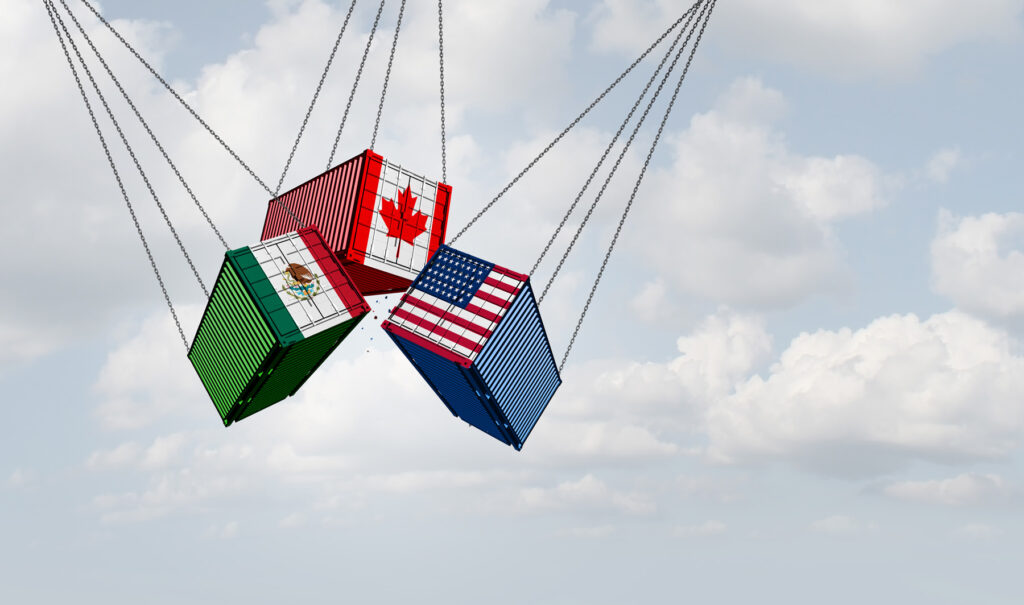
The North American manufacturing community has now had over a year to sort out the differences between NAFTA and USMCA. But many are still unsure about exactly how the two free-trade trade agreements differ and what provisions impact them most. 

While most of the terms remain unchanged between the two trade deals, there are several key differences that should be noted. We will cover the most significant differences between NAFTA and USMCA to clarify the new trade deal paradigm. This enhanced understanding will simplify things for manufacturers interested in manufacturing in Mexico or other North American locations. 

The NAFTA Replacement

Giving voice to the frustration of many in the US, then-candidate Donald Trump called NAFTA “the worst trade deal maybe ever signed, anywhere.”  As automation and other factors brought about an historic decrease in US manufacturing jobs at the same time the North American Free Trade Agreement (NAFTA) was implemented, many linked the two in a causal relationship. It seemed that NAFTA had somehow shifted these jobs to Mexico. 

As a result, NAFTA was hugely unpopular since it’s implementation in 1993. Major political leaders from both sides of the aisle in the US decried the deal. Trump made replacing it a central plank in his campaign platform. And in the summer of 2020, his renegotiation of the deal with Mexico and Canada went into effect. 

Called the United States-Mexico-Canada Free-Trade Agreement (or USMCA), the new version looks a lot like the old one. However, the Trump administration argued it patched up a lot of holes that gave the US the short end of the proverbial stick in international trade. Progressives in the US pledged it will also protect labor in all three signatory countries.

Below are the primary differences between NAFTA and USMCA that international manufacturers should be aware of.

Key Differences with the New USMCA

  • Automotive Industry rules have changed. The automotive industry was probably the primary industry affected by the USMCA. Now, country-of-origin rules have changed. In order for automobiles to enjoy tariff-free status, at least 75% of their parts must come from North America. NAFTA previously required 62.5%. 

The hope is this will increase North American jobs by decreasing reliance on inputs from South Korea, Japan, Germany, and other parts-supplying countries. Vehicles that do not meet this higher ratio are subject to a 2.5% tariff. However, this change may result in higher automobile costs for consumers

  • Labor rules have changed. Under the USMCA, 40-45% of an automobile’s parts must be manufactured by workers making at least $16/hour by next year to avoid tariffs on that unit.

Likewise, Mexico is required to pass more labor-friendly laws, making it easier for workers to unionize. A key change in the USMCA version debated in the US Congress was to create an enforcement panel of multinational exports to ensure labor protections in Mexico. Currently, Mexico has the lowest wages in North America by far.

  • Canada’s dairy market was opened. Now, US farmers have increased access to Canada’s dairy market. All three countries, under both NAFTA and USMCA, enjoy 0% tariffs on agricultural goods. 
  • Digital and Intellectual property protections have been extended. Under NAFTA, copyright protections lasted until 50 years after the author’s life. This has been extended to 70 years.
    Additionally, the USMCA prohibited duties on digital products like ebooks and music, even offering protection against lawsuits for US-based internet companies for content on their platforms. 
  • Certification of Origin has been simplified. Under NAFTA, companies were required to complete a formal certificate of origin. However, this may now be satisfied through informal means, such as commercial invoices or other documentation.
  • The De Minimis threshold was increased. The minimum threshold for duty-free imports has been increased to $150 USD (up from $20) for imports into Canada and $100 (up from $50) for imports into Mexico. This will especially impact retailers importing low-value goods.
  • There is now a Sunset provision. One of the key differences between NAFTA and USMCA is the sunset provision that causes the agreement to expire 16 years after it was implemented (2036). It also requires a review of the trade deal every six years to amend or re-authorize the agreement to ensure no issues are overlooked.

Expectations are that the USMCA will create more jobs for the US, Mexico, and Canada, and increase worker protections. Mexico already has more FTAs (free trade agreements) than any other country. And this reworking of NAFTA is viewed positively as a net gain for the Latin American country and US or Canadian firms operating there. 

Complying with Mexico’s New Outsourcing Law

Last August, Mexico’s new outsourcing law went into effect, nearly banning outsourcing labor. However, the new restriction allows for certain activities to be outsourced, so long as strict criteria are followed. Failure to comply with these restrictions and carefully follow the various requirements could mean severe fines and, in some cases, even criminal penalties. 

The Background

It’s important to understand the context in which Mexico’s new outsourcing law was proposed and passed. Originally proposed in November of 2020 by Mexico’s President Andres Manuel Lopez Obrador, the ban on subcontracting was to support the formal economy and protect workers’ rights.

However, there were concerns from both the public and private sector that an outright ban would dramatically hinder the economy and cost jobs. Companies in the US that rely on Mexican maquiladora manufacturing also raised concerns about harm this would cause for nearshoring factories. 

In the end, the strict proposal failed. In its place, Mexico’s federal government passed a modified version in 2021 that allowed for providers of specialized services to provide contracting services, so long as strict regulations were followed.

The New Law

Now, subcontracting is allowed only for services not related to the principal business activity of the company for whom the services are performed, or the beneficiary. The omnibus bill actually modified eight laws in total, but the primary outcome was to require outsourcers to only provide specialized services and prevent companies from relying solely on subcontractors. 

The Obrador administration had argued that subcontracting jobs did not provide the same level of workers’ rights protections that in-house roles did. Mexico is a country of stark economic disparity and has a bitter memory of labor exploitation in the 19th and 20th centuries. They have codified many protections for the rights of employees. But approximately half of the Latin American country’s workers are outside the formal economy. Another 5 million of their workers work as contractors rather than employees. 

According to Mexico’s new outsourcing law, the country’s Ministry of Labor and Social Welfare (or STPS) has issued strict regulations governing outsourcing and contracting relationships and maintaining a registry for those providing specialized services. Individual contractors and firms providing personnel for specialized contracting services must register with the STPS for a Specialized Service Provider registration (or REPSE). 

Compliance Considerations

Providers of specialized services and those beneficiaries who contract with them must comply with the following laws:

  • Federal Labor Law
  • Social Security Law
  • National Institute for Employees Housing Fund Law
  • Income Tax Law (ISR)
  • Value Added Tax Law (IVA)
  • All general REPSE rules set forth in article 15 of the Federal Labor Law

Providers must not perform any services relating to the principle or core business activity of the beneficiary. In addition to maintaining a valid REPSE registration, they have the obligation to:

  • Enter into a service agreement that includes the registration and a description of the services to be provided, the purpose of the work, and the number of personnel assigned to the project. 
  • Provide to all contractors badges or employee IDs that differ from those of the beneficiary’s employees and include a photograph and name and that designate them as an employee of the service provider. 
  • Provide informational reports to the Social Security Institute (or IMSS) and the National Institute for Employees Housing Fund (or INFONAVIT) every January, May, and September regarding the scope of work and service agreements entered into for that period. 
  • Submit to the beneficiary a compliance certificate from IMSS, a compliance certificate from the Tax Administration Service (or SAT), a compliance certificate from INFONAVIT, copies of digital payroll tax records (or CFDI), copies of bank records showing payment of IMSS fees and tax withholdings, verification of Value Added Tax (or IVA) payments, copies of ISR salary payment statements, and proof of filing periodic informational reports on service agreements as required.

Companies benefiting from the services of a specialized contractor may hire third-party personnel providers or share supplemental services within the company, only inasmuch as outsourced services do not fall under the company’s core business or corporate purpose.

Penalties for Non-Compliance

Both beneficiaries and specialized service providers are liable for non-compliance with these requirements of Mexico’s new outsourcing law. Both must verify compliance for both parties or face stiff fines.

Failure to comply may result in fines as high as $220,000 USD. There may also be criminal penalties. If either party fails to prove compliance, they may be unable to deduct expenses for tax purposes such as value-added tax, contracting payments, etc.

Companies who rely on outsourced personnel for their strategy should carefully re-evaluate their corporate structure and perhaps adjust corporate purpose and core business to avoid penalties for overlapping responsibilities with third-party vendors and contractors. 

The Port of Ensenada Alternative

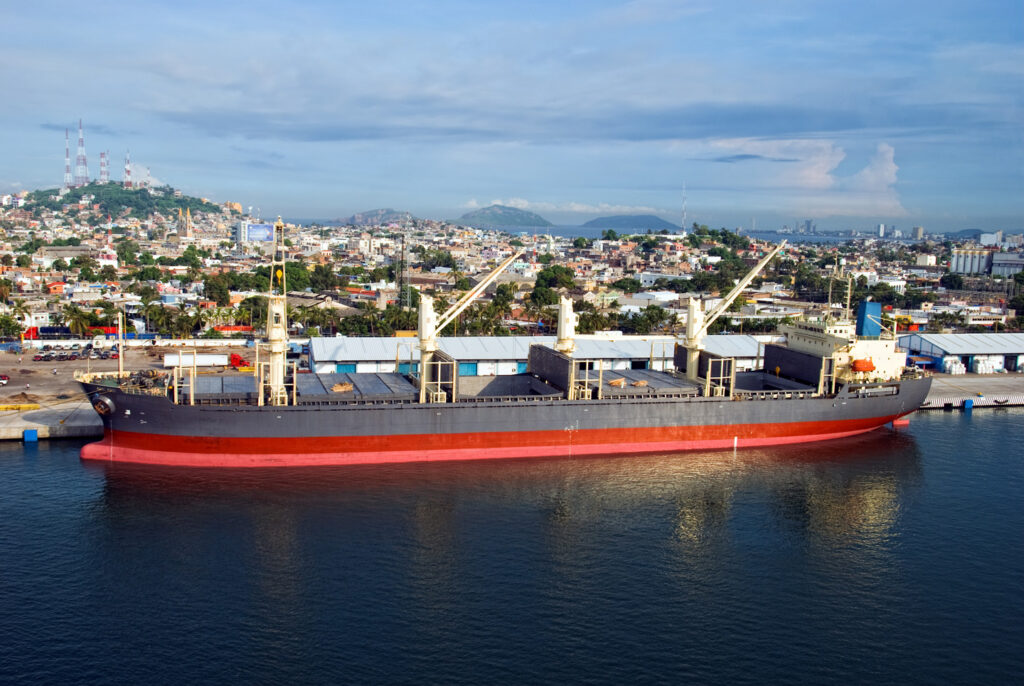
As the global supply chain crisis continues, many are considering the Port of Ensenada as an alternative to the US West Coast. Mexico’s northernmost port is just south of the Ports of Long Beach and Los Angeles. While not as large, it is a much more direct route to Mexican destinations and just a short distance from the US border. 

With capacity expansions in the works and increasing focus on facilitating container traffic, the Port of Ensenada has relieved congestion at California ports in previous years, and its reliability as an alternative is growing. 

Congestion in LA

It’s no secret that around a third of US, ocean-bound import/export traffic passes through the Port of Los Angeles and nearby Long Beach – and that recent months have seen an unprecedented backlog of waiting container ships. This congestion is further hampered by the container shortage and is part of an overarching supply chain crisis that isn’t going away.

Driven by rising US consumption, shortages in containers and trucks, and fewer drivers, the supply chain crisis is expected to last through 2022. The LA port is simply unable to process the backlog of containers at sufficient speed to keep up with demand. And as a result companies are losing money.

Currently, Long Beach and Los Angeles have about 30 vessels anchored, about 15 vessels in the terminal, and about 75 ships backing up outside the port. Ships are having to wait about a month to unload their containers.

While a $100-per-container fine was announced in late October to reduce the number of aging cargo containers clogging up terminal space, the fee has not yet been implemented. The mere announcement of the fee has incentivized companies to expedite their operations to remove empty containers before a given deadline, thus freeing up space for incoming cargo and alleviating the container shortage mildly. The fee was postponed for now, but both ports are reporting a 47% reduction in aging, on-dock containers. If not postponed, over 36,000 containers would have been fined. However, congestion is still at alarming levels.

The Alternative

While many companies transporting freight into North America from Asia are merely waiting their turn and counting their losses, others are turning a bit south of the border. In the 2015 congestion crisis, the Port of Ensenada was very useful for relieving the pressure and allowing freight to pass freely into northern Mexico near the border crossing as Tijuana. 

This deep-water port accommodates cargo, cruise ships, and has an unloading dock for containers. While much smaller than the port of Los Angeles, it processes over 120,000 TEUs and nearly 3 million tons of cargo annually. In 2010, the port brought in nearly 3.6 million tons. 

Lying on the Bahia de Todos Santos in the manufacturing center of Baja California, the Port of Ensenada receives ships from all over the Americas and Asia. It is Mexico’s 2nd busiest port, and also a very popular port-of-call for pleasure cruises. 

Growth at the Port of Ensenada

In 2015, the port experienced a significant increase in traffic, which continued through the congestion crisis that gripped the Port of LA in 2015. In 2015, the port experienced a volume increase of 39%, year over year, and a 60% increase over 2010. In 2018, imports grew by over 28%, exports grew over 5%, and the 5-year period preceding it saw total loaded cargo volume rise by a staggering 125%. It is now the 5th largest container port in Mexico.

In 2019, the port invested $100 million towards increasing container capacity. Earlier that year, the port’s terminal, received two new super post-Panamax cranes. The addition was part of an upgrade to increase container storage area, double the dock to more than 2,000 feet, and increase annual handling capacity to 400,000 TEU. The move was part of a calculated campaign to attract high-volume traffic from companies using the Port of Los Angeles 200 miles north. Major brands already shipping containers into the port include notable names like:

  • Samsung
  • Sony
  • Hyundai
  • LG
  • Ford
  • Toyota

While the US ports in South California can handle 30 times the capacity of the Port of Ensenada, proximity is a huge draw. Shippers to Mexico can forego the congestion of the Ports of LA and Long Beach as well as the several-hour drive to cross the border. Shippers find that, while getting goods from LA to Tijuana typically take up to three days (prior to the congestion), it usually takes less than one day from the Port of Ensenada.

Mexico’s northernmost port may be small compared to the Goliath Ports of Los Angeles and Long Beach, Ensenada has all the infrastructure to handle a steady stream of container traffic, and the history of having provided an alternative to LA in previous crises. Shipping directly to this port may provide the perfect alternative during the current supply-chain crisis and even beyond.

The Challenge of Supply Chain Relocation from China

Global manufacturing leaders are rethinking current supply chains. As trans-oceanic shipping backs up and supply shortages rise in Asia, reliance on China is making less and less business sense. However, while other locations seem promising alternatives, supply chain relocation is no simple feat.

Manufacturing dependence on Chinese supply chains now goes back decades. Many companies have substantial assets tied up in China. Relocating this equipment, intellectual property, supplier network, and production capacity is a very complex and challenging issue. Nevertheless, many companies are embracing the challenges, and relocating to Mexico and other offshore destinations.

The Breakdown of China

Manufacturing in China has been lucrative since the 90s. And so much so, that US and global producers have committed nearly all of their eggs to this basket. Now, however, over-reliance on Chinese suppliers is proving to be their downfall.  

While things have been changing for several years, the past two years have sent a clear signal that the time to reconsider the supplier mix is here. Currently, shipments from China are severely backlogged. Containers are in short supply, and the ports simply cannot handle the volume of trade with China. Unfortunately, this is no temporary glitch. The US in particular has come to realize we’re in the midst of a full-fledged supply-chain crisis

But other factors are driving the need for supply chain diversification away from China. The Asian country is also the world’s largest carbon emitter, burning through coal at entirely unsustainable rates.  In spite of access to huge energy reserves, China’s economic machine is sputtering as a result of persistent power shortages that make it increasingly difficult to depend on them for consistent results.

Other shortages have been plaguing China, too, contributing to an effective breakdown as the leading supply chain destination. The country’s labor shortage appears to be a long-term problem, since the working-age population peaked in 2011. As their working class dwindles, the labor problem is exacerbated by COVID-19 restrictions, which make it more difficult for migrant workers and workers without the proper papers to find employment. 

Ports are also locked down frequently for mass testing and the fear of outbreaks. Recently, the Port of Ningbo was shut down over a single case – shutting down the world’s 3rd busiest port in the middle of a supply chain crisis. 

Supply Chain Relocation to Mexico

We have written before on the many reasons companies are choosing to move to Mexico. The Latin American country offers many advantages over China. In brief, some of these include:

  • Lower labor costs: China’s minimum wage is approximately 257% higher than Mexico’s. China is quickly outpacing Mexico, as their cost of manufacturing rises.
  • Proximity: Managing outsourced operations is much easier when your corporate office is just a quick flight or drive from the factory.
  • Shorter lead times: Port closures and trans-Pacific shipping aren’t an issue when your factories are just south of the border.
  • Stronger IP Protections: While Chinese IP laws are confusing and leaky, Mexican takes IP protection very seriously.
  • Skilled labor: Mexico’s workforce is young and highly educated, with most universities coordinating directly with industry to tailor fit programs to industry specifications.

Principle Challenges

Supply chain relocation may be an easy decision for some, especially in light of Mexico’s advantages. But effectively accomplishing this can be very challenging. Mexico, however, comes with its own set of complexities

China and Mexico are very different countries, and this is especially noticeable in their economic and manufacturing systems. US manufacturers accustomed to a certain way of doing business in China cannot expect to simply move these systems to Mexico and carry on as before. Certain challenges must be met and complexities sorted through for success in supply chain relocation to Mexico. 

For example, China typically provides turn-key solutions for finished goods. Vertical integration is the standard model there, and contract manufacturing is usually quite simple for foreign companies. As a result, most US companies that use Chinese manufacturing no longer have the engineering and design expertise to handle product design and step-by-step operations. 

But in Mexico, the focus is on intermediate goods. Success in Mexican manufacturing typically involves a high level of cooperation and co-creation. This means providing plans and specifications and help in the design phase.

Chinese companies believe they own the proprietary drawings, schematics, materials specifications, and even the tooling for a finished product. Therefore, relocating a specific product to another country will require inputs that the US company may not have access to. 

Likewise, Chinese rules for capital transfer can be quite challenging. Many who choose to relocate out of China find it next to impossible to take their equipment with them. Outsourcing may mean the need to acquire new machines and equipment – or partnering with another company making the same or similar product to share the burden. 

In regards to raw materials, China’s scale of volume is much higher than in Mexico. As such, raw materials sourced elsewhere may not be as competitively prices. Additionally, there must be a focus on value engineering to reduce the costs of over engineering.

A key way to reduce the impact of these challenges is partnering with another manufacturer making the same product to share the cost of contract manufacturing. Or take advantage of embedded supplier networks and shared economies of scale by entering Mexico under a shelter service. But understand that overcoming decades of reliance on China will not come easily or quickly. There will be challenges to overcome, requiring creative ways of re-thinking the manufacturing process.

Top 10 Best Practices for Effective Manufacturing

Effective manufacturing begins with proactive planning and evaluation of all systems. Best-in-class manufacturers understand that implementing certain practices and processes increase productivity and effectiveness to give them the edge over their competitors. If you’re interested in a more successful manufacturing operation, here is how to achieve it.

Effective Manufacturing Success

Before we can implement these best practices for manufacturing success, let’s first examine what manufacturing success looks like in order to better understand how to achieve it.

  • First, a successful and effective manufacturing operation has full visibility of the process at every turn – product quality, materials selection, order accuracy, you name it.
  • Next, a more effective manufacturing process is efficient in manual workflows, shorter cycle times, streamlined factory operations, and seamless quality control.
  • Perhaps most well-known, effective manufacturing reduces costs without cutting quality.  These savings can be maximized across direct labor costs, material costs, and overhead.

Following proven strategies and best practices will systematically push a manufacturer towards these success outcomes. And what exactly are best practices? In a nutshell, best practices for manufacturing are methods or techniques that can be consistently implemented across different operations with the same caliber of improvement over and over again. Manufacturing Operations Management (MOM) can utilize these methods to consistently outperform other ways of doing things, producing better results and boosting profitability through greater efficiency and performance. 

  1. Create Common KPIs 

Establish and define a universal set of key performance indicators (KPIs) that can apply to all operations. Identify the most pressing and relevant KPIs at the current stage. As operations streamline and improve, implement a strategy to add new KPIs as new data and processes are brought online. 

  1. Maintain Equipment Preemptively

As the saying goes, an ounce of prevention is worth a pound of cure. Achieve effective manufacturing by implementing a system of preventative maintenance for all equipment to avoid expensive downtime and more complex breakdowns. Consult equipment manufacturers to establishing a comprehensive plan for keeping everything running smoothly.

  1. Invest in Your Team

With labor shortages plaguing US manufacturers, it’s becoming increasingly difficult to effectively deliver a timely product. Successful manufacturers understand the need to create a robust and inspiring workplace culture. Foster communication channels that flow upward rather than trickle down. Your people are your greatest asset. Motivate them and listen to their feedback.

  1. Cross-Train

In line with motivating your workers is the best practice of cross-training them. Effective manufacturing operations are flexible and resilient. They can roll with the proverbial punches. How? Through a staff cross trained in multiple roles and able to troubleshoot, substitute, or help relieve logjams. 

  1. Lean Manufacturing

Lean manufacturing principles promote system-wide efficiency. This powerful practice harmonizes the entire value chain, eliminating waste and non-value-added activity. It originates in Japanese manufacturing and is extremely beneficial for repetitive, mass-production operations.

  1. Systematize Quality Management

Virtually every manufacturing operation has quality control practices. But in order to promote consistency in production and reduce mistakes, these practices should be systematized. This system should have provisions for reacting to changes like materials shortages.

  1. Prioritize Traceability

Among the most important of best practices is traceability, the ability to know the location and journey of each product through the entire chain. This is made possible by pre-established procedures, looking internally and externally, predicated on the principles of:

  • Unique identification
  • Data capture and recording
  • Management of links

Having visibility on a product through the entire chain enables effective manufacturing by reducing logistics costs, dispatch and reception times, manual controls in port, and increasing information availability, performance control, competitive positioning, and many other advantages.

  1. Adopt Automation

The role of automation in improving efficiency goes without saying. Yet, many companies are hesitant to embrace its many benefits.  Production costs go down, human error is minimized, and processes are streamlined when companies implement the power of robotics and process automation.

  1. Smart Outsourcing

Highly successful manufacturers know a key way to compete on a global scale is through strategic outsourcing. Outsourcing comes in different forms. Some companies opt to open wholly-owned subsidiaries in foreign countries where labor is more affordable. Others partner with shelter providers to take advantage of their foreign factories without having to open one of their own. Another popular option, especially for smaller companies is contract manufacturing. Contracting with a manufacturer for certain parts or the whole product can be highly efficient, faster, and infinitely scalable. 

  1. Organization

Plant organization is a simple but effective practice to improve productivity and efficiency. Wasted space, itself, is a liability. When workers are not tripping over debris on the shop floor or spending time looking for tools and materials, the production line is more efficient and productive.

Every best-in-class manufacturer follows these ten steps to greater manufacturing effectiveness. Implementing even just a handful can revolutionize your process, stretching out your productivity and efficiency all the way from acquiring and managing materials to consistently delivering quality products to market.

A Guide to Mexico’s New Carta Porte Supplement

For those shipping freight within Mexico using any modality, Mexico’s new Carta Porte supplement is a requirement. Regardless of which route you take, what product you ship, or what mode of transportation employed, the new customs requirements are now in effect.

Why the New Requirement?

 Mexico’s tax administration, SAT, estimates that approximately 60% of all goods transported within the country are smuggled. Latin America faces substantial loss of tax revenues, thanks to smuggled and undocumented goods. 

Therefore, SAT has been working on a solution to crack down on goods of illegal origin and strengthen formal trade. The solution comes in the country’s waybill regulations as the Carta Porta supplement, and should help enhance traceability to reduce the incidence of stolen, counterfeited, or smuggled goods being transported in Mexico.

This bill of lading, which changes digital customs requirements, should reduce cargo theft and even make Mexico a benchmark for global, intermodal cargo transport, according to the Mexican Institute of Transportation.  Additionally, it is hoped that this new supplement requirement will reduce or eliminate the annual tax loss of approximately $7 billion USD.

What is the New Carta Porte Supplement?

Existing paperwork requirements for shipping cargo in Mexico will not be changed or eliminated. However, the Carta Porta supplement will only be added to the list of requirements. This special type of bill of lading can be added to invoices for the following purposes:

  • Identification for the shipment’s origin and destination
  • Proving goods are legally possessed by those shipping them
  • Specifying the VAT withholding amounts for that shipment

Prior to this requirement, other documents were required to demonstrate and prove ownership, destination, midpoints, etc. These documents are still required as per usual. However, the Carta Porte supplement is also required as an add-on to these. 

Depending on who is transporting the goods, the supplement may be added to either the Income (or Revenues) CFDI (for owners moving their own goods) or the Transfer CFDI (for freight forwarders or hauling services). When the supplement is added to the Income CFDI for shipment for shipment by a haulage service, the product value should list the value of the haulage service. When the supplement is added to the Transfer CFDI for shipment through an intermediary or agent of transport, the product value should be zero, and description should include the object of transfer. 

With upwards of 160 questions to fill out, this addendum is now required for all freight of any size, regardless of the modality of transport – road, rail, air, or sea. If the products are being moved in Mexico, the shipper, carrier, and involved suppliers are responsible for carrying and providing this documentation at checkpoints throughout the country.

Compliance Considerations

Originally set to take effect in June of 2021, the implementation was eventually extended to December 1. This is when trial enforcement began. However, authorities recognized the need to give cross-border operators more time to comply. So, full enforcement of the waybill requirements begins on January 1, 2022. 

At that time, the fine for non-compliance will be up to approximately $4500 USD, depending on the severity of the infraction. This fine is payable by the carrier, shipper, or other parties. The transporter should carry in the vehicle at all times a copy of the digital CFDI with the Carta Porte supplement properly validated by SAT prior to transportation begins. 

Besides the fine, there are other penalties that can be imposed for non-compliance. At random port checks, highway stops, or other verification checkpoints, proper documentation must be produced. If the papers are not in order, the Authority of Roads and Transportation is empowered to seize the goods being transported and hold them until documentation of compliance is produced. 

Haulage companies may additionally lose their driving privileges. And the owner of the goods may not deduct the VAT charged by the hauling company.

For help simplifying compliance and international manufacturing and transport operations, contact us about our shelter services.

What is the Status of Vaccines in Mexico?

If you’re considering doing business south of the border, then you are probably interested in the subject of vaccines in Mexico. What is the current status of vaccination rollouts and requirements? With vaccine mandates being debated in the United States, and employment often depending on vaccination status, how Mexico has handled the same challenges may be unknown to you.

In this article, we will break down Mexico’s COVID response: their restrictions, business protocols, border concerns, the mandate question, and the current status of vaccines in Mexico. This information will help you in determining if Mexico is a good fit for your business.

Vaccination Status in Mexico

As the COVID scare spread through early 2020, Mexico’s numbers of positive test results climbed rapidly. Death counts for people with COVID were among the highest in the developed world. As a result, there was a significant drive to reach full vaccination in the Latin American country. 

In spite of delayed rollout of the vaccines in the country, Mexico’s President Manuel López Obrador declared on October 29, 2021 that “the commitment to apply at least one dose to all Mexicans, women and men 18 years or older, has been fulfilled.”

On that date, a full 83% of adults, and 58% of the overall population, had received at least one COVID-19 shot. The country has had some difficulty in acquiring the doses, and has currently received 147 million doses, approximately 58% of the vaccines it contracted for. 86% of those doses have been administered, almost exclusively to Mexican adults. 

In spite of a court order to vaccinate youths, the Mexican government has pushed back against the concept of mass vaccination for children aged 12-17, citing their much lower risk of contracting the virus and questioning the court’s authority in the matter. Their position is that adults should be vaccinated first and that only youths with underlying health conditions, and therefore greater risk, should be administered the drug.

There are of course geographical disparities in the rollout of the shots. Among the northern states, where much of the adult population is employed in international manufacturing and important supply chain production, vaccine status among adults is very high. Generally speaking, the further south, the lower the acceptance of vaccines in Mexico.

International Travel

In March of 2020, the US and Mexico jointly closed their borders to non-essential travel and instituted restrictions on business travel. However, the border was re-opened in November of 2021 to all non-essential travel with certain restrictions. 

All land ports and ferries are now open into Mexico, but proof of vaccination is required. This is Phase 1 of two phases. The second will be implemented early next year when the US will require proof of vaccination for entry. 

When travelling in Mexico, it’s important to understand Mexico’s system of handling the perceived thread of COVID infection. Mexico utilizes a color-coded system whereby each state is assigned the color red, orange, yellow, or green, based on how severe current hospitalizations and infection rates are at the time. Currently, most Mexican states, including the state of Mexico and Mexico City, are in the green. 

Masks are generally worn indoors, but outdoor use is common, too. Outdoor events are permissible, but sometimes at reduced capacity. States in the green have no curfews or significant restrictions on travel, distancing, or gathering sizes. At present, there are no mandates regarding vaccines in Mexico.

Workplace Protocols for Vaccines in Mexico

With vaccine mandates becoming a hot button issue in the US, it is interesting to note that freedom is given to Mexican employees to determine their own vaccination status. While employers may request information regarding the vaccine status of their employees, they must only do so with consent of the employee. And because this information is considered personal and sensitive, such a request must include a privacy disclosure notice that details how this information will be used and a description of what data will be collected and stored.

Vaccines in Mexico are considered a highly individualistic choice. Employers may not discriminate against the unvaccinated. And testing is voluntary. While employees are legally required to disclose when they are seriously ill, this only serves to assign them a sick leave permit. Businesses in Mexico may not dismiss an employee for refusal to vaccinate. At this time, non-vaccination is not considered to be just cause for dismissal. But employers may dismiss an employee without cause if they supply a complete severance package. 

Any encouragement the company may provide workers internally must be free of discriminatory language or threats. They may offer access to these drugs or treatment options or even incentives for being vaccinated. But there must be no implied threat of loss of employment benefits over the matter. 

The hope is that, while the COVID scare has cost the Mexican economy much, the vaccination of most adults and ever lower infection rates mean Mexico has rounded the corner. The economy and manufacturing business show positive signs of rebounding strongly in the near future. Companies considering moving to Mexico should be aware of Mexican protocols for handling the virus and prepare for an optimistic future. 

By the Numbers: Fabricated Metal Manufacturing in Mexico

Mexico boasts one of the most robust manufacturing sectors in the world for fabricated metal products. With applications in numerous other industries, from automotive manufacturing to appliances and construction, fabricated metal manufacturing in Mexico is a multi-billion-dollar industry annually. In recent decades, the Latin American country has acquired significant levels of technological advancement and manufacturing knowledge to surpass other outsource destinations.

The data numbers show a country dedicated to profitable manufacturing and brimming with growth potential in the metal space. Labor is affordable, well trained, and highly productive – especially along the border. 

This niche has a solid economic foundation and a history of producing more than simple assembly operations, but sophisticated design and innovation in the field. Below is an overview of the current industry strength, capacity, and growth trends.

Strength of Fabricated Metal Manufacturing in Mexico 

  • Foreign Direct Investment in the metal fabrication sector for the first half of 2021 was $160 million USD.
  • Gross domestic product for the same period was about $220 billion USD.
  • Border states, Baja California, Sonora, Chihuahua, Nuevo León, Coahuila de Zaragoza, and Tamaulipas, account for over half of that total.
  • In 2019, total gross production in this industry was about $19 billion USD.
  • In the second quarter of 2021, fabricated metal manufacturing in Mexico employed a workforce approximately 820,000 strong.
  • There are nearly 75,000 companies operating in this space, 637 of which employ over 100 workers.
  • Each year, Mexico receives over 7,000 units of metalworking production equipment.
  • Some of the metal products manufactured in Mexico include wire, screws, nuts, rollers, forgings, castings, machined and galvanized parts, and more.
  • Fabricated metal manufacturing in Mexico feeds several key industries, including automotive, aerospace, medical devices, electronics, appliances, and other advanced industries.
  • So far this year, Mexico is responsible for approximately 75,000 economic units. 
  • Manufacturing accounts for 17.6% of total GDP in Mexico.

Demographics

  • Metal fabrication is predominantly a male segment, with only about 13% of the workforce comprised by women.
  • The average metal fabricator is in his late 30s.
  • Workers in this field typically have on average 10 years of schooling. 
  • Approximately 48% of the workforce is informal.
  • Nearly half of the workforce has received advanced training.
  • Average annual salary in this industry is about $3,400 USD.

Regional Considerations

  • The primary producers of fabricated metal units are the states of Mexico, Jalisco, and Puebla.
  • Nuevo León brings in the highest revenue from metal fabrication in Mexico.
  •  The border states are home to the highest concentration of companies with access to financing and capital.
  • Primary sources for FDI include the US ($87.5 million USD), the Netherlands, and Japan.

Fabricated metal manufacturing in Mexico is as diverse as it is strong. The sector produces parts, equipment, and finished products for a wide array of applications. And because it is well connected to Mexico’s deep supply chain for raw materials and extensive trade network, Mexican-made metal products are highly profitable. 

This is even more true due to the high-value nature of modern Mexican manufacturing, which now includes increasingly sophisticated processes and innovation. Also contributing is the incredible technology transfer that has made Mexico a global metals hub. 

Mexico is now one of the top 10 sources of industrial production in the world. And with modern advancements and infrastructure investments, Mexico is poised to continue on this track for years to come. 

Maquiladora Manufacturing: 8 Strategic Benefits

As shorter supply chains become more desirable, maquiladora manufacturing in Mexico is becoming increasingly attractive. Globally competitive manufacturers in the US (and abroad) are leveraging Mexico’s unique production ecosystem to their advantage.

In short, a maquiladora is a foreign-owned factory or manufacturing operation in Mexico, producing goods for export. In this way, US companies can outsource cost-intensive segments of their production process and under preferential tax arrangements to maximize efficiency. 

Below, we will explore the key ways in which maquiladora manufacturing provides strategic advantage to these manufacturing companies, allowing them to be more flexible, competitive, and successful.

  1. VAT Credit

Manufacturing operations with a maquiladora certification may pay VAT with a special credit. This is especially helpful, considering how many special imports and exports required along the value chain the manufacture of a finished good. Using this special tax credit relives a substantial burden and allows companies to focus more on their product and maximizing profitability. 

  1. Product Flexibility 

Virtually any product may be successfully manufactured in Mexico. With limited exceptions (some weapons and radioactive components need special permitting), factories in Mexico have access to any components, materials, and requirements to assemble and produce whatever their customer base desires.

  1. Labor Access

For several years, the US has been experiencing a severe shortage in skilled manufacturing labor. And in just the past couple of years, the problem has become much more severe. By 2030, the problem is supposed to have escalated to a whopping 2.3 million unfilled manufacturing jobs. 

However, a key advantage held by those with a maquiladora is access to a whole new labor pool. Rather than relying solely on US personnel, US producers can tap into a vast pool of skilled, low-cost, manufacturing labor. Mexico’s industry-focused educational institutions produce thousands of technicians and engineers, made-to-order for specific manufacturing jobs in the country.

  1. Permanent Establishment Protection

When outsourcing manufacturing to another country, there is always the risk of triggering permanent establishment taxing status. In this scenario, regardless of the country of residence, the foreign company then becomes liable for income tax in the country of operation simply by having an established operation there. 

However, when participating in Mexico’s maquiladora manufacturing in partnership with a shelter service, this tax burden can be eliminated. Provided that the manufacturing company and their shelter service provider meet certain criteria and provide certain information on taxes paid to the country of residence, they will not be considered a permanent establishment of Mexico.

  1. Duty Avoidance on Imports and Exports

Maquiladora manufacturing in Mexico qualifies US companies for special import/export tax treatment. Typically, under the IMMEX Program, the company may eliminate their VAT burden, as well as the general import tax for goods that enter the country for a limited time. This period is usually 6-12 months, but depends on the kind of product. As long as these goods and materials are imported for the sole purpose of manufacturing goods for export, these inputs and goods are classified in a temporary classification and exempted from duties.  

In this way, US companies are able to take advantage of all the raw materials, technology, and inputs from, not one, but two countries without exposure to any import/export taxes. A US company may set up a maquiladora in Mexico, import technology and equipment from the US, use inputs and materials from both Mexico and the US, and then export the finished product back to US consumers, paying little or no duties.

  1. Location Flexibility

A US firm has virtually unfettered access to prime Mexican manufacturing locations, without paying customs, so long as their products are exported out of the country. From the Bajio in the center of the country to the bustling industrial complexes along the US border, US companies may set up shop anywhere. And those who manufacture in border regions like Tijuana and the Baja California area find the proximity to US markets a boon.

  1. Unrivaled Free-Trade Access

Perhaps Mexico’s most powerful strategic advantage is the world’s largest free-trade network. While US has free-trade agreements in place with several countries, Mexico’s collection of over agreements (FTAs) is the largest of any country, giving access to those who manufacture in her maquiladoras access to over 50 countries and more than two thirds of the world’s population. 

  1. Other Cost Savings

In addition to avoiding customs and VAT taxes on imported inputs and exported goods, maquiladora manufacturing in Mexico offers other savings advantages. Labor costs in Mexico are substantially lower than in the US and even lower than in other popular outsourcing destinations like China. Highly specialized manufacturing clusters and industrial parks help streamline costs and maximize economies of scale.

How to Get Started

Companies who want to leverage the many strategic advantages of maquiladora manufacturing should first identify which route they want to take. There are several popular methods, including purchasing a wholly-owned subsidiary, contract manufacturing, or partnering with a shelter service for optimum protection and process control. If the decision is made to open a maquiladora, depending on which route you take, you may need to provide several key documents and requirements in addition to your IMMEX application. 

We can help walk you through the process and simplify things for you. Just contact our maquiladora specialists for a consultation.

It’s easier than you think.

Get in touch and we’ll show you how.