In 2026, tariff policy is no longer a background variable. It is a strategic driver of location, supply chain architecture, and capital allocation.
Recent trade measures under Section 232, IEEPA authorities, and reciprocal tariff frameworks have introduced a new layer of complexity to global sourcing decisions. Steel and aluminum duties have increased. Automotive imports face heightened scrutiny. Semiconductor and industrial component classifications are under closer review. And in several cases, tariffs may overlap or interact depending on product composition and origin.
For executive teams, the question is no longer simply where production costs are lowest. It is how exposure accumulates — and how structure determines outcome.
One of the most misunderstood elements of current trade policy is how different tariff regimes interact. Certain products may fall under Section 232 measures. Others may trigger reciprocal tariff provisions. In some cases, specific measures do not stack, while in others, exposure can accumulate depending on classification, content mix, or country of origin.
For example, components containing steel, aluminum, or copper may face layered scrutiny if improperly classified. Automotive and heavy vehicle categories have distinct rules. Certain materials are subject to elevated duties, while others may qualify for exemptions under USMCA if origin documentation is properly structured.
The technical distinction between stacking and non-stacking measures can materially impact landed cost.
What appears to be a manageable tariff at first glance may change significantly depending on supply chain design.
Tariff risk is not only about product category. It is about how the operation is structured.
Country of origin documentation, import-export configuration, customs classification discipline, and production sequencing all influence final exposure. Companies that treat compliance as a post-entry administrative task often discover exposure only after audits, reclassification, or enforcement reviews.
In contrast, when trade compliance is integrated into operational design from the beginning, exposure can be anticipated, documented, and controlled.
That distinction becomes critical in a policy environment where trade enforcement remains active and subject to political cycles.
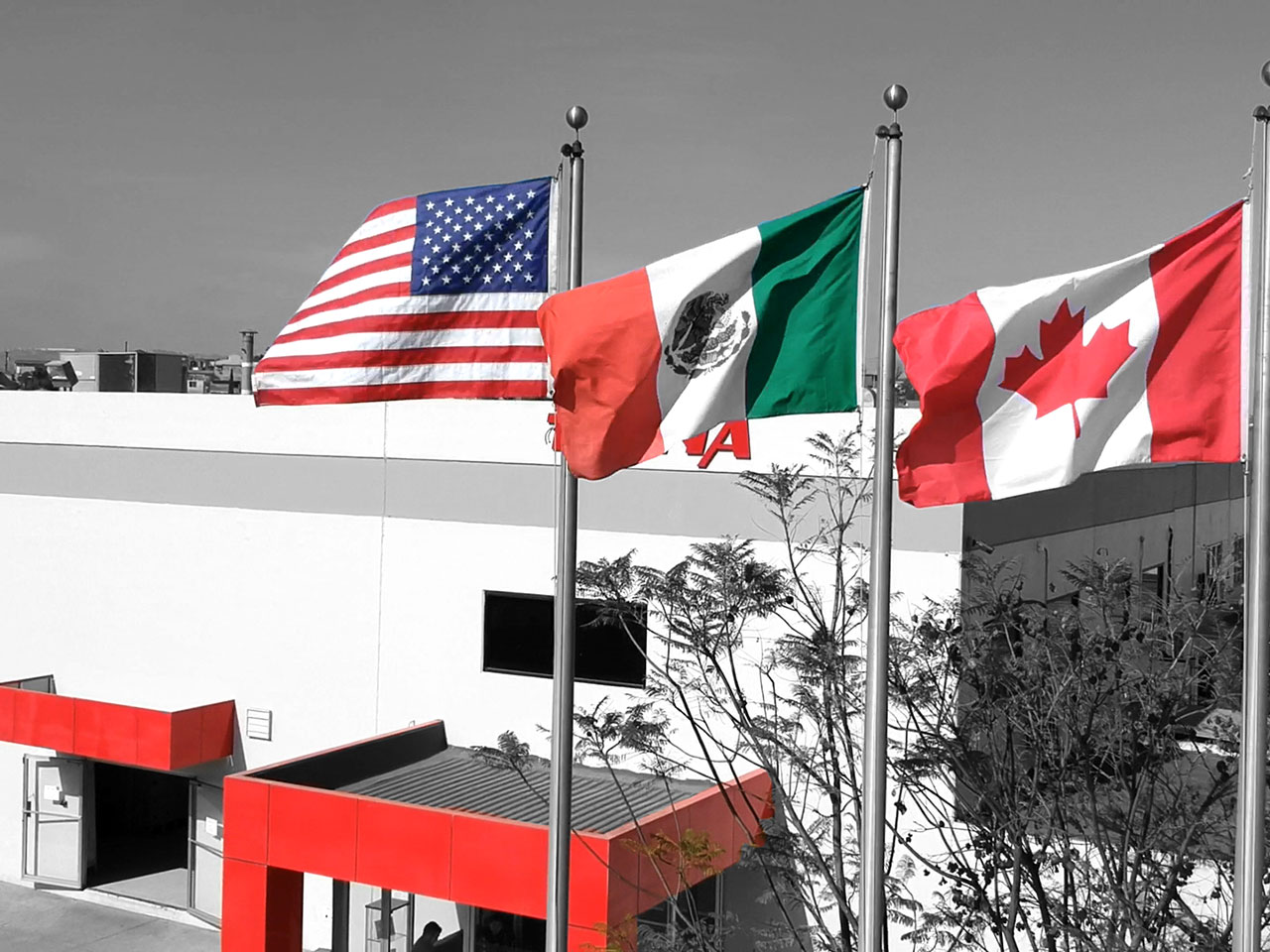
Amid increased tariff volatility, North American integration under USMCA remains one of the most stable trade frameworks globally.
Companies that structure production to qualify under USMCA rules of origin can mitigate certain external tariff exposures. However, qualification requires discipline in sourcing, documentation, and reporting. It is not automatic.
This is where structural clarity matters.
Operating within a framework that understands both U.S. commercial expectations and Mexican regulatory execution creates alignment between trade policy and production reality. When designed correctly, cross-border manufacturing can serve as a buffer against unpredictable external tariff waves.
Tariff volatility has shifted from episodic to structural. Political transitions, industrial policy shifts, and sector-specific measures will likely continue to evolve.
In this environment, flexibility is not enough. Clarity is required.
A well-designed operational structure does not eliminate tariffs. It ensures that exposure is visible, documented, and aligned with long-term strategy. It allows leadership teams to evaluate trade risk as part of capital planning rather than react to it after enforcement.
At TACNA, we work with manufacturers to integrate trade compliance, customs administration, and regulatory structure into the operating model from day one. By aligning U.S.-side commercial planning with Mexican-side execution, companies gain transparency over how their production footprint interacts with evolving tariff frameworks.
In 2026, tariffs are no longer a line item. They are a structural variable.
And structure, more than geography alone, determines whether they become a manageable cost — or a strategic vulnerability.